at the East Freetown Congregational-Christian Church
A Brief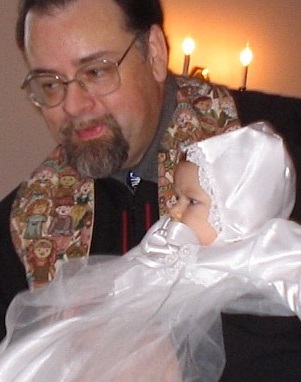 History of Baptism
Prior to the coming of Jesus, the Jews baptized Gentiles who wanted to convert to Judaism. John the Baptist introduced a baptism of repentance (Luke 3:3). In both of these baptisms, water was used as a symbol of washing or cleansing when a person wanted to change their life, either by conversion or repentance. Jesus, himself, was baptized in the River Jordan by John the Baptist, who told the crowds that while he baptized them with water, the “one who is more powerful than I is coming after me…He will baptize you with the Holy Spirit.” (Matthew 3:11)
The early Christian Church continued the practice of baptism using water as a cleansing symbol of change in a person who accepted Jesus Christ as Lord and as a sign of initiation into the Christian Church.
Various denominations within Christianity use different forms of baptism and have slightly different understandings of baptism.
We believe baptism can happen at any age, and that in baptism God says that this person (infant, child, youth or adult) is “my beloved child in whom I am well pleased.” The sacrament of baptism is an outward and visible sign of the grace of God. Through the sacrament of baptism we declare that the love of God comes to us in different ways, but always with the same assurance.
The baptism of an infant reminds us that the love of God comes to us before we are even aware of it. The baptism of a child reminds us that God’s love does not depend on our understanding. The baptism of a youth or adult reminds of us of our own commitment to affirm publicly our love for God and our desire to be marked as one of God’s own. Regardless of when baptism is performed, it is a sign that the love of God comes into our lives freely. It becomes real as we learn to see the world with eyes of faith and experience life together in a community of faith.
Infant baptism is the most common form of baptism, signifying God’s gracious gift of life. When a child is baptized, we celebrate the possibilities of new life and our mutual responsibility in caring for that life. Water is used because it is a symbol of life (Genesis 1:2). Life comes from water, depends upon water, and out of the waters of a mother’s womb a child is born.
We believe that baptism brings a person into the universal church of Jesus Christ. Through baptism, one becomes a Christian. Profession of faith will come later in life when a young adult will choose to specifically join this church. There is only one baptism. It is a sign that we are God’s forever; there is no need for renewal. We recognize baptisms from all other Christian churches and denominations. We also believe that baptism should be performed during communal worship, when the entire congregation may gather to participate. A congregation accepts responsibility in nurturing and teaching all children. Adults who are shy about being baptized in front the entire congregation may make arrangements with the minister.
Because baptism marks the entrance into the Christian Church, the parents, godparents or sponsors, and the congregation make a promise to ensure that the person baptized will have the opportunity to know and experience the Christian faith.
Participating in the ritual of Baptism without intending to participate in the life of the church presents a serious breach of honesty before the congregation, the minister and God.
While we will baptize those who are not members of the East Freetown Congregational-Christian Church, we expect that parents will plan to raise their children in a local church, upholding their promise to teach their children the stories of our faith and guide them in the way of Jesus Christ. When a person is baptized at the East Freetown
Congregational-Christian Church, we take seriously our promise to help nurture them in their faith journey. It is our intention to teach and support them in their faith through Church School, worship, fellowship, and Bible study.
It is our tradition to use a small amount of water from the baptismal bowl, comingled with drops of water from the Jordan River to make the sign of the cross on the person’s forehead, and baptize them in the name of the Trinity: God, Jesus Christ, and the Holy Spirit. Baptism by immersion, for adults or teens may be arranged with the minister.
Procedures for Baptism
Prior to a baptism, the minister appreciates the opportunity to meet parents and children if they are available. During this meeting, parents will be able to share why they would like for their child to receive the Christian sacrament of baptism and may ask any questions they might have. Your family and guests are welcome to sit anywhere in the congregation. Please let them know that our service of worship begins at 10 a.m. Video cameras are allowed as long as the camera operator remains seated in their pew. Photographs may be taken during the service of worship. Baptism is a Christian sacrament and a part of corporate Christian worship. There is no fee for this Christian sacrament. We do hope that you will invite your family and friends to join the congregation for this joyous occasion.
History of BaptismPrior to the coming of Jesus, the Jews baptized Gentiles who wanted to convert to Judaism. John the Baptist introduced a baptism of repentance (Luke 3:3). In both of these baptisms, water was used as a symbol of washing or cleansing when a person wanted to change their life, either by conversion or repentance. Jesus, himself, was baptized in the River Jordan by John the Baptist, who told the crowds that while he baptized them with water, the “one who is more powerful than I is coming after me…He will baptize you with the Holy Spirit.” (Matthew 3:11)
The early Christian Church continued the practice of baptism using water as a cleansing symbol of change in a person who accepted Jesus Christ as Lord and as a sign of initiation into the Christian Church.
Various denominations within Christianity use different forms of baptism and have slightly different understandings of baptism.
We believe baptism can happen at any age, and that in baptism God says that this person (infant, child, youth or adult) is “my beloved child in whom I am well pleased.” The sacrament of baptism is an outward and visible sign of the grace of God. Through the sacrament of baptism we declare that the love of God comes to us in different ways, but always with the same assurance.
The baptism of an infant reminds us that the love of God comes to us before we are even aware of it. The baptism of a child reminds us that God’s love does not depend on our understanding. The baptism of a youth or adult reminds of us of our own commitment to affirm publicly our love for God and our desire to be marked as one of God’s own. Regardless of when baptism is performed, it is a sign that the love of God comes into our lives freely. It becomes real as we learn to see the world with eyes of faith and experience life together in a community of faith.
Infant baptism is the most common form of baptism, signifying God’s gracious gift of life. When a child is baptized, we celebrate the possibilities of new life and our mutual responsibility in caring for that life. Water is used because it is a symbol of life (Genesis 1:2). Life comes from water, depends upon water, and out of the waters of a mother’s womb a child is born.
We believe that baptism brings a person into the universal church of Jesus Christ. Through baptism, one becomes a Christian. Profession of faith will come later in life when a young adult will choose to specifically join this church. There is only one baptism. It is a sign that we are God’s forever; there is no need for renewal. We recognize baptisms from all other Christian churches and denominations. We also believe that baptism should be performed during communal worship, when the entire congregation may gather to participate. A congregation accepts responsibility in nurturing and teaching all children. Adults who are shy about being baptized in front the entire congregation may make arrangements with the minister.
Because baptism marks the entrance into the Christian Church, the parents, godparents or sponsors, and the congregation make a promise to ensure that the person baptized will have the opportunity to know and experience the Christian faith.
Participating in the ritual of Baptism without intending to participate in the life of the church presents a serious breach of honesty before the congregation, the minister and God.
While we will baptize those who are not members of the East Freetown Congregational-Christian Church, we expect that parents will plan to raise their children in a local church, upholding their promise to teach their children the stories of our faith and guide them in the way of Jesus Christ. When a person is baptized at the East Freetown
Congregational-Christian Church, we take seriously our promise to help nurture them in their faith journey. It is our intention to teach and support them in their faith through Church School, worship, fellowship, and Bible study.
It is our tradition to use a small amount of water from the baptismal bowl, comingled with drops of water from the Jordan River to make the sign of the cross on the person’s forehead, and baptize them in the name of the Trinity: God, Jesus Christ, and the Holy Spirit. Baptism by immersion, for adults or teens may be arranged with the minister.
Procedures for Baptism
Prior to a baptism, the minister appreciates the opportunity to meet parents and children if they are available. During this meeting, parents will be able to share why they would like for their child to receive the Christian sacrament of baptism and may ask any questions they might have. Your family and guests are welcome to sit anywhere in the congregation. Please let them know that our service of worship begins at 10 a.m. Video cameras are allowed as long as the camera operator remains seated in their pew. Photographs may be taken during the service of worship. Baptism is a Christian sacrament and a part of corporate Christian worship. There is no fee for this Christian sacrament. We do hope that you will invite your family and friends to join the congregation for this joyous occasion.